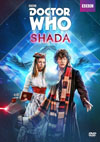
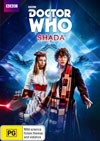
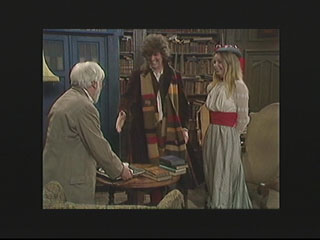
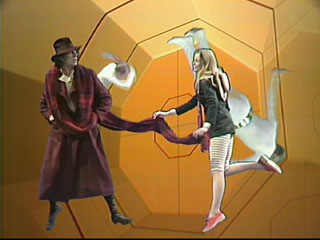
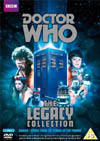
During the aborted making of this story in 1979, only the outdoor location filming and the first of three studio sessions were completed. Because of this, the story was never shown on or syndicated for broadcast television. But, thanks to new animation, a reassembly of the original cast for voice work including both Tom Baker and Lalla Ward, and a whole new musical score, we now have an opportunity to see and hear the full story....
2017/2018 DVD/Blu-ray Packages include:
Well, now we have a wonderful full-length movie version on DVD that lets us see and hear the whole story, with missing scenes animated and voiced by the original cast as of 2017. It really is a glorious effort, finally doing audio/visual justice to the full narrative. However, though it claims to be complete, sharp-eyed fans like me may notice that there are still a few scenes missing, perhaps sadly deemed unimportant.
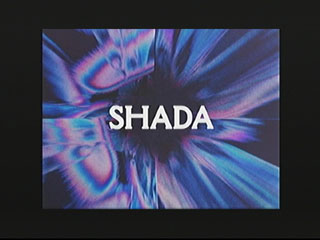
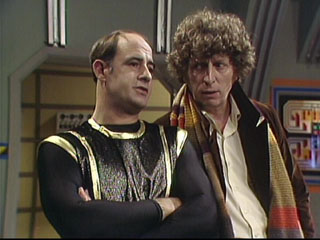
But more centrally, this new 2017 version is just somehow more lacking in energy than other versions I've witnessed. It's something to do with the editing, the music and sound, and a bit of a technical visual brain-fart. Most other episodes of Doctor Who from around this time are shot in the 4/3 aspect ratio of the time, are presented as such on DVD, and fill my 4/3 television screen quite nicely and clearly. Shada's original footage is also 4/3, the new animation matches it in 4/3, but unlike every other version of "Shada" that I've seen, I'm looking at a small square picture surrounded by great black bars on all four sides:
...And so I end up feeling more distanced from the visuals than I should be, all because of a simple technical mistake that lasts two and a half hours. Who's idea was it to pointlessly put a 4/3 movie inside a 16x9 VTS on the DVD disc? And ditto for all the 4/3 extras? Was this a factor in delaying the North American standard DVD release for a full year? I suppose this won't really affect anyone watching with a 16x9 screen, but it is a significant difference to the rest of the Doctor Who line. If every other Doctor Who DVD from the past 20 years could get this right, why not Shada in 2018?
I also noted how long it took for this story in general to project a sense that it was going somewhere, how long it took for it to start to really MOVE. I think I might actually prefer Keff McCulloch's original opening cue for giving Skagra's first scene a bit of marching energy. I also think the opening TARDIS scene, which is missing in this new movie, did something to motivate the many leisurely scenes that follow and hint at the plot that would unfold. For sure, the TARDIS interior scenes early in Part Three are doing a lot to help reinforce the stakes in the surrounding scenes and how the events of those scenes interact and depend on each other; they provide for the viewer the sense of goals and obstacles coming into conflict, a sense which can otherwise get lost or forgotten. So, there is something to be said for not monkeying around with the original structure as written. Douglas Adams' writing clearly seems to be far more balanced and interesting in its pure original form, reminding one why he became such a celebrated writer. Thankfully, this new movie goes on to reveal much more of the original intent than any previous commercially available version...
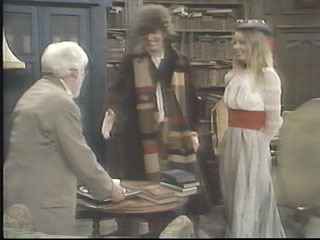
The story is not without its share of problems. The Krargs don't really have much opportunity to demonstrate that they can accomplish anything at any point in the story. The Doctor's encounter with them bridging episodes 4 and 5 does not demonstrate any strategy for creating an interesting conflict between the two, resulting in an extremely impotent reprise. The script for the encounter bridging episodes 5 and 6 seems poised to produce exactly the same effect. Luckily, the final battle in episode six seems to be much better thought out. Under a good director, it stands a chance to work quite well, but sadly the problem of lack of energy and pace still haunts director Charles Norton's movie version here, and I'm not sure that the action remains too clear either. Christopher Neame's Skagra does not really have a chance to shine during the original 1979 footage, but his role seems to get more interesting in other portions of the script. I do think though that Neame brings a certain presence to the screen, an ominous stillness if you will, which almost NEEDS a lack of music in order to be most effective. One can see more of Neame's villainy in the second season opener of "Sliders", titled "Into the Mystic" (Sliders story no. 10), or as a Sith Lord in the PC video game "Star Wars Jedi Knight: Dark Forces II". Denis Carey was able to complete nearly all of his scenes as Professor Chronotis, easily the most memorable and beloved of his performances on both Doctor Who and Blake's 7. The humorous Time Lord Chronotis reminds me very much of Patrick Troughton's Doctor, and has a similar appeal. Shada's original 1979 footage shines brightest while developing professor Chronotis and the legends of Gallifrey. It is a shame that Carey was no longer with us in 2017 to finish recording his lines for Part Five, as they would have heightened the sense of the final clues of a mystery coming into place and getting solved. However, the new movie works with its minor rewrite and a new line from Carey coming from I don't know what performance or clever feat of editing trickery. Chris Parsons and Clare Keightly seem to work best while fulfilling the traditional companion role, and when they can put their considerable university educations to good use. They don't work quite as well when responding to the unknown - which they typically do with either too much misplaced emotion, or bland philosophy, or, as happened with other characters in the previous story "The Horns of Nimon", they need to catch up with the audience. A little too much screen time is spent convincing laymen that science fiction ideas are an intergalactic reality. The location filming at Cambridge is a lot of fun in itself, and highly memorable, seeming to cement the Doctor's growing popularity with young adults and university students. It's a wonder that they hadn't thought to set a story there before... or since! There is a lot to like about Mark Ayres new 2017 score, which gets better as it moves along, and gradually reveals itself to be more and more of an homage to Dudley Simpson's Doctor Who music. Most prominent is a main theme that seems to have been pinched from that same season's very popular "City of Death" story, but slightly curtailed and altered before proliferating into many different variations for all sorts of different scenes. Though very nostalgic, I admit I expected something more original. For me, the music gets more interesting and fits the picture better when we get to the more spacey settings later in the show. There is a bit more depth and power to the sound than was usual in the 1970's, while still maintaining the fun factor. The best Simpsonesque touch for me was the re-use of the fourth Doctor's theme, in early part six, as we first see an animated Doctor back in his own TARDIS. Sweet. As a whole, the score seems to stick with a similar palette of orchestral instruments and early electronic sounds to that which would have been available to Simpson in 1979. I'm looking forward to listening more intently to it all again. And yes, I will echo the most common complaint leveled against this new 2017 version of "Shada" - it should have stuck with the six episode format. In fact, the DVD's makers haven't really given any thought to make life easier for viewers who don't want to watch all 2.5 hours of Shada in one go. There is no proper scene selection menu on the DVD. And the movie has very few chapter stops, none of which line up with the planned cliffhangers. I rarely re-watch classic Doctor Who six-parters all in one sitting, and it's a bit vexing to be so pushed in that direction here.
Of course, it wouldn't do to ignore that other version of Shada which, up until 2017, had been the only way for the general public to view the original footage. This abbreviated release of the footage on VHS tape in 1992 (and then again on DVD in 2013) with added music and effects, along with some extra links narrated by Tom Baker, was a brave attempt to make the original footage look and sound as finished as possible. However, it only tells the actual story adequately enough to rank it fourth out the six stories of the season. Only entering post-production over a decade after it was shot allowed the task of musical scoring to escape Dudley Simpson's monopoly and land in freelance composer Keff McCulloch's lap instead, making the incidental backing of this story far different from the usual season seventeen fare. The score sounds and works best when traditional sounding instruments like the flute come to the fore. Many scenes get a new boost with music added, such as the moment where a mid-cue switch to low piano notes adds a wonderful underlying menace to Skagra's first conversation with the porter Wilkin. Other sequences, such as the bicycle chase, receive a necessary complement of energy from the music. But in other scenes, the music actually seems to be sapping atmosphere out of the story, and a wavering synthetic instrument in the foreground seems to be what spoils it most for me. When all is said and done, there is a lot to enjoy from this story musically. Nicely, the story is presented in its proper six episode format, taking care of cliffhangers, and all appropriate credit sequences. I don't know why this simple move escaped the makers of the 2017 movie version. However, if you've only got this 1992 version on VHS Video or DVD with abbreviated links narrated by Tom Baker, don't expect it to be quite so wonderful. A bit too much of the essential story just isn't there.
2013 DVD Packages include:
Rumour is that Ian Levine spearheaded yet another more recent attempt to reconstruct this story, which was rejected by the makers of the 2013 DVD. I have no idea how legitimate their reasons may have been, but I can't say I was very motivated in 2013 to buy a regurgitation of the 1992 VHS cassette with extras, considering how badly we all wanted to see a version of the story that was actually finished. Then of course there is another version starring Eighth Doctor Paul McGann who never really had a proper era of his own. This is included on both the 2013 DVD, and the 2017/2018 DVD/Blu-Ray packages. I can't say I'm excited about that either. So far I've only watched it as far as the pre-title teaser, a kind of fan-rambling about continuity that really takes one out of the moment and into icky territory. Sorry, "Shada" is a 4th Doctor / Tom Baker story, belonging to this precise point in season 17 of the show's chronology, and I wouldn't know how to invest in it emotionally any other way. This version's 8th Doctor retro-framing device isn't doing much to inspire me. I can say this about the presentation - It has the proper six episode format. Perhaps one needed a computer to view it from the 2013 DVD, but the 2017/2018 DVD will also play it from any DVD player onto your TV. But again, it defaults to play all six episodes in one go, with no episode selection menu or scene selection menu. On average there are two chapter stops per episode - and this time there is a chapter stop lined up in between each episode. Better yes, but still not all it easily could have been. I wonder how many of us fans are going to try to edit 2017's movie into a six episode version, with proper titles, credits, and the better bicycle chase sequence from the 1992 version? Will we add text of those few remaining missing scenes to make the balance even better still? It may be some time before I embark on my own Best-of Mix-N-Match edit...
International Titles:Deutsch: (Ein Planet namens Shada)Magyar: "Shada"Français: (Shada)Русский: "Шада"Because the German language contains the oft-used, VERY similar-sounding word "Schade", which means "pity", it seems a good idea to specify that the title of this story actually refers to the name of a place.
Season Seventeen Rankings:
Shada - New 2017 / 2018 Version:
Comments on this article are welcome. You may contact the author from this page:
|
|||||||||||||||||||||||||||||||||||||||||||||||||||||||||||||||||||