
|
Monetary Reform"The intelligent want self-control; children want candy."~Mevlana Rumi
|

|
-Home Page
-Site Map -Contact Page

Articles: -The Maldek Files -Recipe for Health -Political Evolution -Animal Whispering -E=mc2 Page -Philadelphia Experiment -Green Control -Monetary Reform
Resources: -Dr. Stephen Covey -Dr. Bruce Lipton -Powertalk Interviews -Flax Oil Secrets -The Future of Food -Archive Page -What the Bleep Do We Know at Lyratek.com?
Astronomy
-Cosmos -How the Universe Works
Science Fiction
-Sliders -Star Trek -The Matrix 
|

|
~unknown
The De-Privatization of Our Monetary Systems
Privatization of health care was hotly debated in both the 2000 and 2004 federal elections. Privatization of our electrical generating and delivery companies has also been a hot button topic in Ontario provincial elections, in which many have pointed to California's less than successful experimentation in the field. Private education has also become a concern for many. The beginnings of the privatization of our system of roadways has also lead to Ontario's first major toll highway, the 407. But perhaps the most important government function threatened by privatization is one that gets no serious mention in the news media or on the campaign trail. It is so well disguised in institutional euphemisms that very few even realize that the issue exists, and fewer still take the initiative to question it openly. Most governments of the world have privatized the supply and control of their own national currencies. "The ... bill grants just what Wall Street and the big banks for twenty-five years have been striving for - private instead of public control of currency. It [the Glass-Owen Bill] does this as completely as the Aldrich Bill. Both measures rob the government and the people of all effective control over the public's money, and vest in the banks exclusively the dangerous power to make money among the people scarce or plenty." testifying before the U.S. Congress as they neared a vote on the Glass-Owen Bill in 1913.
World currencies are beyond the threat of privatization, they have already been privatized decades ago. The real threat today is that people have grown so accustomed to the way things are now, we forget to even question it, or take what action we must to come up with a better system.
One of the most common assumptions is that national governments owe these sums to each other. I fell into that belief early on from watching light media coverage of the debate of this issue, and apparently the writers of the feature film "The Day After Tomorrow" were not beyond it either, although the offending comments seem to have been quietly removed from the DVD release. But that would mean there must be large, rich countries out there loaning money, with their own treasuries "in the black". Can you name any? It's not Canada, with our national debt measured in billions of dollars. It's not the United States, with their national debt measured in trillions of dollars. Most European countries fare no better. And third world countries can barely maintain the necessities of life. "Virtually every nation involved in World War Two greatly multiplied their debt. In the U.S. for example, federal debt went from $43 billion in 1940, up to $257 billion in 1950, an increase of 598%. Between 1940 and 1950, Japanese debt swelled 1348%, French debt grew 583%, and Canadian debt soared 417%." screenwriters of the film "Capital Crimes: How The Federal Reserve Robs Us Blind" Who, or what, is loaning the money for all these government national debts? Private Banking institutions of course. The Canadian national debt is owed to the Bank of Canada. The U.S. national debt is owed to the Federal Reserve. British national debt is owed to the Bank of England. And so on, and so on. If these banking institutions were actually part of their national governments, what use would it serve for the government to loan itself money, pay interest, and use debt-reduction as an excuse for not taking care of health, electricity, education, roads, and all the other public services that constantly get shortchanged? "In the United States today we have in effect two governments.... We have the duly constituted Government.... Then we have an independent, uncontrolled and uncoordinated government in the Federal Reserve System, operating the money powers which are reserved to Congress by the Constitution." Chairman of the House Banking & Currencies Committee in the 1960's
The sad truth is, the Bank of England is a privately owned corporation, as with the Bank of Canada and the U.S. Federal Reserve. Governments spend huge portions of the tax revenue paying interest to private banks. Fair minded readers may be thinking, "Well, if you borrow the money, you have to pay it back." And that is the insidiousness of this particular scheme: on the surface, settlement of debts has the air of fairness about it. But governments are a little different from the common person or business when it comes to handling money. Governments have both the right and the responsibility to create and manage a form of currency for those people it represents. And nearly all of the world's national governments, particularly the largest, have contracted these rights and responsibilities out to private banks, and then gone into their debt. Indeed the contracts are designed such that the entire nation's currency has its source in the national debt. If the government were to actually and simply pay off its national debt, the country would be without a currency. A government must do more to survive and thrive economically than simply pay off its national debt. It must also relearn to exercise its right and responsibility to create and manage its own currency. In a democracy, the people are the government, thus absolute transparency is a must. Remember, the British Empire expanded and prospered while England used the Talley Stick system of currency, which was strictly controlled by the British Monarchy. The American Colonies experienced one of their healthiest economies ever during the pre-revolutionary period when they made and managed their own form of debt-free money called colonial scrip, when just enough was issued for balanced trade. "In the colonies we issue our own money. It is called Colonial Scrip. We issue it in proper proportion to the demands of trade and industry to make the products pass easily from the producers to the consumers. In this manner, creating for ourselves our own paper money, we control its purchasing power, and we have no interest to pay, to no one."
Wars have been fought over the control of the monetary systems. Election campaigns have been won and lost over the issue. Leaders have been assassinated because of it. "If the American people ever allow private banks to control the issue of their currency, first by inflation, then by deflation, the banks and the corporations which grow up around them will deprive the people of all property until their children wake up homeless on the continent their fathers conquered." No plan to reduce and eliminate government debt should ignore the successful strategies of Andrew Jackson, the only U.S. president in American history to ever pay off that country's national debt. In essence, he patiently and determinedly de-privatized the country's capacity for creating and managing its own supply of currency, and was elected on a platform to do just that, becoming the first president to tour the country during an election campaign and winning landslide support amongst the people to reclaim their currency for them. Why don't we hear more of this from the major mainstream media? Because television & radio stations, and newspapers and magazines, like many other businesses, operate on bank loans. Their ability to report on scandals is often compromised by the need to keep their investors happy, keep their loans secure, and keep the advertising dollars from large corporations flowing. Most media personnel and even politicians today are not even aware of the issue, after generations of successful repression and counter-propaganda embedded into our educational systems. But the issue of monetary reform may dare to re-enter mainstream politics again today, with increased scrutiny and attention going to the new deals that governments are rushing to give to banks around the world. The atmosphere of fear and panic surrounding these moves is the greatest reason to suspect it may be a case of even more public power being consolidated in bankers' hands, but greater in-depth scrutiny is required before this determination can be made. One thing is for sure: fear often produces the very results people hope to avoid, and an attitude of calm assertiveness is far more constructive. With clear heads and solid perseverance and determination, moving out of a debt-based economy by recreating a debt-free currency is historically the most tried-and-true solution to the banking woes witnessed in this fall of 2008. "Get Congress to pass a bill authorizing the printing of full legal tender treasury notes.... They will have the full sanction of the government and be just as good as any money; as Congress is given that express right by the Constitution." advising President Abraham Lincoln on the initial creation of debt-free "greenback" notes.
"The Government should create, issue, and circulate all the currency and credit needed to satisfy the spending power of the Government and the buying power of consumers.
"If our nation can issue a dollar bond, it can issue a dollar bill. The element that makes the bond good, makes the bill good also. The difference between the bond and the bill is the bond lets money brokers collect twice the amount of the bond and an additional twenty percent, where as the currency pays nobody but those who contribute in some useful way.
"The problem even transcends the normal spectrum of political right and left.... Either way the bankers win. Monetary Reform is the most important political issue facing this nation." screenwriters of the film "Capital Crimes: How The Federal Reserve Robs Us Blind"
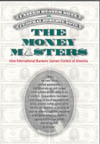
Most quotes on this page are taken from Still & Carmack's film, which is now available in its second incarnation on VHS and DVD as "The Money Masters". The video encourages a plan to do away with U.S. national debt and reform its currency laws, which advocates the following basic steps: Monetary Reform Plan
Article written by Martin Izsak, and authorized solely by Martin Izsak and Lyratek Arts. Comments on this article are welcome. You may contact the author from this page:
~unknown If you enjoyed this article, you may also be interested in:
|

|
|
LYRATEK.COM-The Fourth Density - evolution's progress in our lives
|

